.png)


How to Plan a Month of Reels in One Afternoon
- Lezlie Swink

- May 4
- 12 min read

Most interior designers know Reels should be part of their Instagram strategy. They've seen what good ones can do for visibility and engagement. They fully intend to make more of them. And then life gets busy, a project runs long, and suddenly another month has gone by with maybe one Reel posted on a Tuesday when the guilt got loud enough.
The problem isn't motivation. It isn't even time, not really. It's the absence of a system.
When you sit down to make an Instagram Reel without a plan, every single one feels like a creative project you have to invent from scratch. What do I film? What do I say? What's the hook? Is this even interesting? That mental overhead is exhausting and it's the reason so many designers either avoid Reels entirely or produce them in sporadic bursts that don't build any real momentum.
Here's what changes everything: categories.
When you have a small set of repeatable Reel formats that you rotate through, you stop staring at a blank screen and start working from a system. You know what you're making before you sit down to make it. And when you pair that system with a dedicated batching session, a month of Instagram Reels for interior designers goes from an overwhelming ongoing obligation to an afternoon of focused work.
That's exactly what we're building here.
Why Reels Feel So Hard (And Why They Don't Have To)
There is a specific kind of dread that comes with opening Instagram, seeing someone else's beautifully executed Reel performing incredibly well, and thinking I really need to be doing more of that. Followed immediately by the paralysis of not knowing where to start.
It's not a you problem. It's a structure problem.
Most of the advice floating around about Instagram Reels for interior designers focuses on the wrong things. Use this trending audio. Post at this time. Follow this exact format. And while some of that advice has merit, none of it solves the actual problem, which is that without a repeatable content system, every Reel you make requires the same amount of creative energy as the last one. There's no compounding. No momentum. Just an endless series of blank screens and second guessing.
The designers who show up consistently with strong Reel content aren't necessarily more creative or more talented or less busy than you are. They have a system. They know what they're making before they pick up their phone. They film with intention because they understand what each piece of content is supposed to do. And they batch their work so that one focused session covers them for weeks.
That's it. That's the whole secret.
Instagram Reels don't have to be a source of stress in your content strategy. They just need a framework. And once you have one, the whole thing gets a lot more manageable than the algorithm would have you believe.
The Four Reel Categories That Cover Everything
Before we get into the specifics of each format, here's the framework that makes batching a month of Instagram Reels actually possible: four content categories that between them cover every kind of Reel an interior designer needs to be making.
One category per week gives you a full month. Rotate through them again and you have two months. Mix the order, swap out the topics, adjust for what's happening in your business — the framework flexes without ever falling apart.
Here's the lineup.

B-Roll With an Impactful Hook. Beautiful atmospheric footage of spaces, materials, details, and process — paired with a text hook that stops the scroll. This is your high visual impact content that does its job before anyone even reads a word.
Project Updates. In-progress content that brings your audience along for the ride. A peek at where a project stands, what just got installed, what decisions are being made in real time. This is the content that builds anticipation and keeps followers engaged between reveals.
Behind the Scenes. Showroom visits. Sourcing trips. Market finds. The parts of the process that clients never see but audiences find completely fascinating. This is your personality-driven content that builds genuine connection.
Project Breakdowns. A past or current project broken down with intention. The problem the design solved, the decisions made, the materials worth highlighting. This is the highest value Reel format available to interior designers and the most underused one in the industry.
Four categories. Endless content. One system that actually holds up over time.
B-Roll With an Impactful Hook
If there is one Reel format that every interior designer should have in their regular rotation, this is it.
B-roll with a strong text hook is exactly what it sounds like. Beautiful footage — a detail shot of a finished space, a material being installed, light hitting a room at the perfect angle, a fabric swatch being held up against a paint color — paired with a text overlay that makes someone stop scrolling and actually pay attention.
The footage does the visual work. The hook does the strategic work. Together they create some of the most effective Instagram Reels for interior designers because they play directly to the platform's strengths. Instagram is a visual medium and interior design is a visual industry. This format was practically made for you.
And here's something worth knowing if the idea of talking directly to camera makes you want to close the app entirely: you don't have to. B-roll content includes you. Walking a job site. Flipping through material samples at a showroom. Holding swatches up to the light. Sketching at your desk. Your hands, your process, your world — all of it counts as b-roll and all of it puts a real human presence into your content without requiring you to look directly into a lens and perform. For designers who aren't ready for talk to camera Reels yet, this format is the perfect entry point.
But here's what makes this format really work beyond the aesthetics: familiarity and relatability. The more your audience sees your process, your aesthetic, and your personality show up in your content, the more they feel like they already know you. And that feeling is what moves someone from casual follower to genuine prospect.
That familiarity can show up in a lot of different ways. Sometimes it's educational — a quick tip overlaid on footage of a finished detail that teaches your audience something useful. Sometimes it's inspirational — a beautifully lit space with a hook that makes someone stop and feel something. And sometimes it's just fun. A behind the scenes moment that makes people smile or nod along because it captures something true about the design process — or simply the human side of the brand behind it. The person who obsesses over the details, gets excited about a perfect fabric find, and genuinely loves the work they do. That kind of content is more powerful than it looks.
The key is the hook. Beautiful footage alone will get saves. Beautiful footage paired with a compelling hook gets saves, shares, and follows from exactly the kind of people you want finding your account. Think less "look at this pretty room" and more "the one material we specified that our client almost talked us out of" or "what we found behind the walls on demo day." Specific, curiosity-driven, a little unexpected.
Get in the habit of filming as you go and this becomes the easiest Reel in your entire content rotation.
Project Updates
There is a misconception in the interior design space that the only content worth posting is the finished product. The perfectly styled reveal. The professional photography. The room that looks like it belongs on the cover of Veranda.
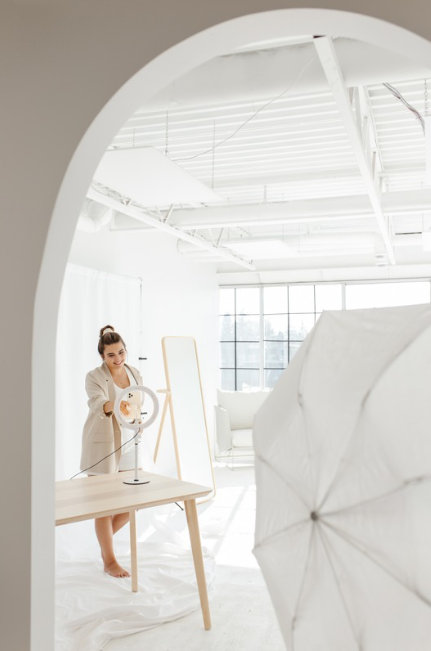
And while that content absolutely has its place, waiting for finished projects to show up on social media means you are leaving months of content potential completely untapped.
Project update Reels are exactly what the name suggests. A quick peek at where a project stands right now. What just got delivered. What's being installed this week. What decision you're currently wrestling with. It doesn't have to be polished. It doesn't have to be complete. It just has to be real.
And real is what your audience is hungry for.
There's something genuinely compelling about watching a space come together over time. When your followers see a project in its early stages and then watch it evolve week by week, they become invested in the outcome in a way that a single reveal post can never replicate. By the time you share the finished project they already feel connected to it. They were there for the process.
That investment builds the kind of engagement that the algorithm loves and more importantly the kind of relationship that potential clients find deeply reassuring. Seeing a designer document their process in real time communicates confidence. It says I'm not hiding anything. This is how I work and I'm proud of it.
A project update Reel doesn't need a script. A quick walkthrough of the space with a text overlay explaining where things stand is enough. Keep it casual, keep it honest, and keep it coming. Your next client might be watching every single one.
Behind the Scenes
If project updates show your audience what you're building, behind the scenes content shows them who is doing the building.
This is the category that lives outside the job site. The showroom visit where you found that perfect tile that changed the direction of an entire project. The sourcing trip where three hours of hunting turned into the exact vintage piece a client had been describing for months. The trade show walkthrough. The fabric library deep dive. The moment you held two paint swatches up to the light and finally made the call.
None of this makes it into the finished project photos. And all of it is fascinating to the people who follow you.
Behind the scenes content works because it pulls back the curtain on a process that most people have no visibility into. Your clients experience the beginning and the end of a project. They rarely see the middle — the research, the sourcing, the decisions, the expertise that goes into every single specification. That middle is where your value lives and behind the scenes Reels are how you show it.
This is also the content category with the lowest barrier to entry for Instagram Reels. You don't need a finished space. You don't need professional lighting. You just need your phone and the habit of hitting record when something interesting is happening. A quick pan around a showroom you're visiting. A flat lay of materials pulled for a current project. A clip of you walking through a trade event with a text overlay sharing what caught your eye.
It's casual by design. And that casualness is actually the point. This is the content that makes your audience feel like they're along for the ride rather than just watching the highlight reel. That feeling of access and intimacy is one of the most powerful trust builders available to a service based professional.
The designers who do this well aren't producing anything elaborate. They're just paying attention to the interesting moments that are already happening in their day and taking thirty seconds to capture them.
Project Breakdowns
This is the most underused Reel format in the interior design space. And it might be the most powerful one available to you.
Every project you have ever completed has a story inside it that a finished photo cannot tell. The problem the client came to you with. The design decision that unlocked the whole direction. The material that almost didn't make it into the spec and ended up being everyone's favorite detail. That story is your expertise made visible — and a project breakdown Reel is how you tell it.
Here's why it works so well. When you walk your audience through the thinking behind a project — the why behind the decisions, not just the what — you are demonstrating expertise in a way that is impossible to fake. Anyone can post a beautiful room. Not everyone can articulate why every element of that room was the right choice for that client in that space. That articulation is your value. The project breakdown is how you show it.
And the format is incredibly flexible. A new project reveal works beautifully here. But so does a project from two or three years ago that never got the attention it deserved. Older work is not dead content. It's an archive of expertise waiting to be reframed and reshared with the audience you have now, which is almost certainly larger and more engaged than the one you had when the project was originally completed.

Before and afters deserve a special mention here too. There is something almost universally compelling about the transformation from what a space was to what it became. A well executed before and after Reel consistently ranks among the highest performing Instagram content for interior designers — not because it's trendy but because the visual contrast tells the story instantly. No explanation needed. The work speaks for itself. And like older projects, those before and after moments are sitting in your camera roll right now waiting to be used.
For the actual execution, two formats work especially well for interior design Reels. The green screen effect lets you place yourself in front of a project image and walk through it directly, which creates an engaging visual without requiring you to be physically present in the space. Voiceover works just as well if being on camera isn't your thing — let the footage speak visually while your voice provides the narrative and the context.
For editing, we use and recommend the Edits app. It was built specifically for short form video content and it makes the whole process significantly faster and more intuitive than trying to piece things together in a general editing app. If you haven't tried it yet, it's worth downloading before your next batching session.
Structure the breakdown around three things: the main problem or goal the design addressed, the key decisions that drove the direction, and one or two special features or materials worth highlighting. That's it. Keep it focused, keep it specific, and let the work do the heavy lifting.
Your portfolio is full of these stories. They just haven't been told yet.
How to Batch a Month of Reels in One Afternoon
Now that you have four solid Reel categories to work with, let's talk about how to actually plan a full month of content without it taking over your life.
Batching is the practice of doing similar tasks together in one focused session rather than spreading them out across the month. Instead of thinking about Reels every single week, you think about all of them once and then execute. It sounds simple because it is. And it works better than almost any other productivity strategy for content creation.
Here's how to approach it.
Step 1: Block the time. Put it on your calendar like a client appointment. Two to three hours on a weekend morning or a slower weekday afternoon. Tell yourself in advance that this is your Reel planning session and protect it accordingly.
Step 2: Assign one category to each week. Week one gets a b-roll hook Reel. Week two gets a project update. Week three gets a behind the scenes. Week four gets a project breakdown. That's your month mapped in about thirty seconds.
Step 3: Pull your footage. Go through your camera roll and identify the clips that fit each category. This is also a good time to identify any gaps — if you don't have behind the scenes footage from a recent showroom visit, add it to your list for the next time you're out sourcing.
Step 4: Write your hooks in one sitting. This is the part most people skip and it's the part that matters most. Sit down with your four Reel concepts and write a hook for each one before you start editing anything. Having the hook written first makes the editing process faster and more intentional because you know exactly what the Reel needs to communicate.
Step 5: Film anything that needs to be filmed. If any of your Reels require a voiceover, a talking head clip, or a green screen segment, batch that filming in one session too. Get dressed, set up your space once, and knock out everything that requires you to be on camera in a single go.
Step 6: Edit, caption, and schedule. Work through each Reel one at a time. Edit the footage, add the text overlay or voiceover, write the caption, and get it scheduled. By the time you finish the last one you have a full month of Instagram Reels for interior designers ready to go.
One more thing worth building alongside this process: a running b-roll library on your phone. Create a dedicated album in your camera roll and drop clips into it every time you film something interesting on a job site, at a showroom, or during an install. When your next batching session rolls around you won't be hunting for footage. It's already waiting for you.
A month of Reels. One afternoon. That's the whole system.
Ready to Hand Off the Reels Entirely?
If you read through all of this and thought "I understand the system but I still don't want to be the one doing it" — that's a completely valid conclusion and honestly one we hear a lot.
Creating consistent, strategic Instagram Reels for interior designers takes time, intention, and a certain amount of creative energy that not everyone has left at the end of a full week of running a design business. Knowing how to do something and actually wanting to do it are two different things.
That's where we come in.
At Swink Social Co. we handle Reels as part of our full social media management services for interior designers. We plan them, we concept them, we edit them, and we make sure every single one fits into a larger content strategy that is working toward your actual business goals. Not just filling up your feed but building the kind of presence that attracts the right clients and reflects the quality of your work.
You focus on the design. We'll handle the Reels.


Comments